When people think of humanitarian aid, they often picture large organisations with big budgets, fleets of vehicles, and teams of external volunteers. But in Eastern Rwanda and in communities like Kirehe, some of the most effective and lasting change is happening through a quieter, more rooted model: local church partnerships.
At International Samaritan's Heart, we have seen firsthand how partnering with local churches doesn't just deliver aid, it multiplies it. This post explores why that is, what it looks like in practice, and why supporting a faith-based humanitarian organisation in Rwanda means your contribution goes further than you might expect.
Why Local Churches Are a Strategic Humanitarian Partner
Churches in Rwanda are not peripheral to community life. They are central to it.
In a district like Kirehe in Eastern Rwanda, the local church is often the most trusted institution in a community. Pastors know which families have lost a breadwinner. Deaconesses know which children are not eating. Elders know which elderly widow has been isolated for months. This knowledge, earned through years of relationship, is something no outside organisation can replicate quickly.
When International Samaritan's Heart partners with a local church, we are not just adding a distribution point. We are tapping into a living network of trust, knowledge, and care that already exists within the community.
This is why church partnerships are not a shortcut. They are a strategic multiplier.
What Church Partnerships Look Like on the Ground
Partnership between a humanitarian NGO and a local church is most powerful when it is built on mutual respect, each bringing what the other cannot.
Here is what that looks like through our work in Kirehe:
Identifying the Most Vulnerable
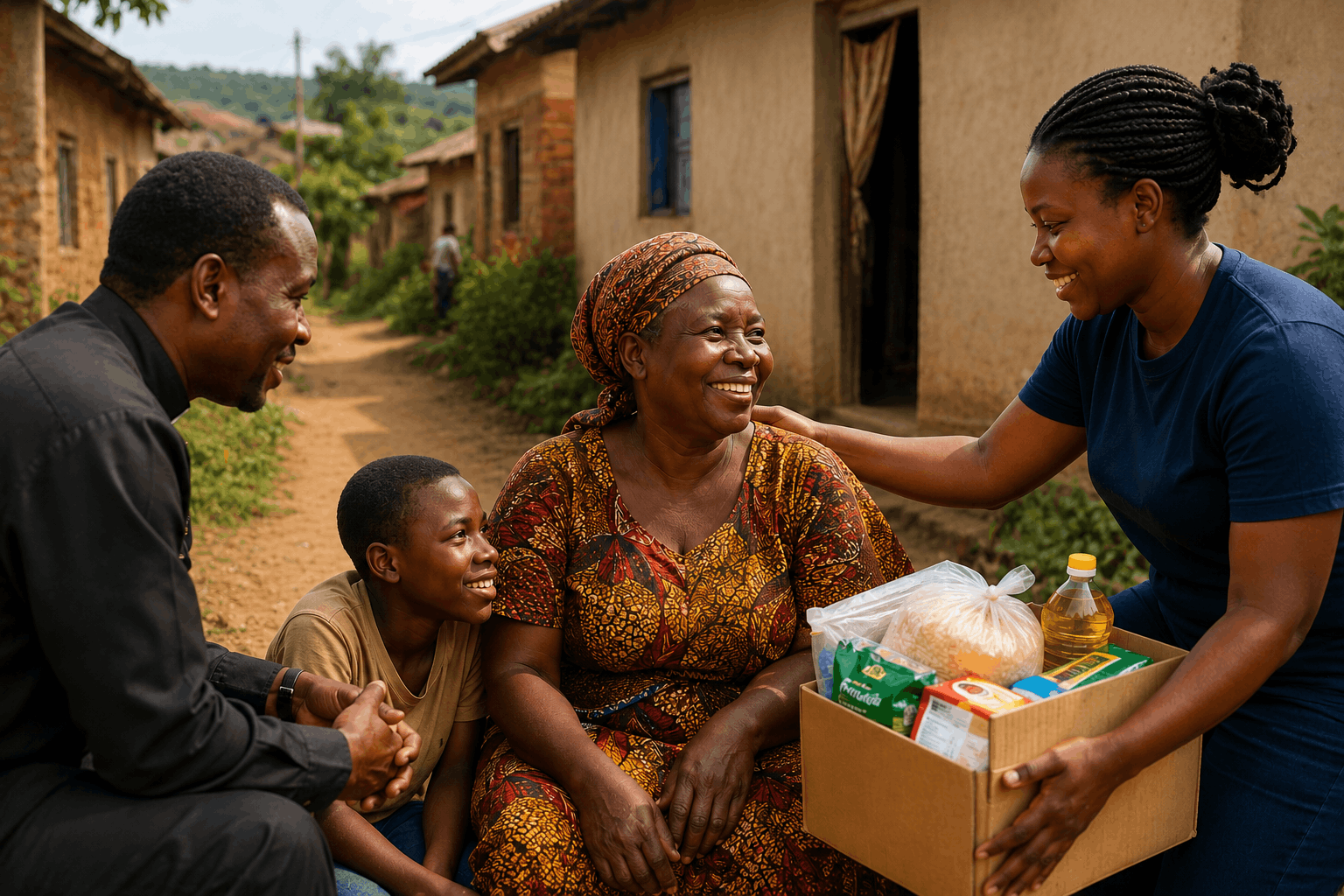
Our teams work with church leaders to identify orphans, widows, elderly individuals living alone, and families in acute need. Because pastors and congregation members already have relationships with these individuals, our outreach reaches people who would otherwise never appear on any government list or NGO database.
This means food packages, clothing, hygiene kits, and household essentials reach the families who need them most, not just the families who are easiest to find.
Mobilising Community Volunteers
Local church members often volunteer their time to support our programs, helping with food distribution, accompanying patients to health facilities, or mentoring youth in our vocational training programs. This volunteer involvement dramatically reduces the cost of delivery and increases the dignity of the interaction. Recipients are not being served by strangers. They are being cared for by neighbours.
Sustained Follow-Up and Care
Aid without follow-up often fails to create lasting change. Church partnerships give our programs continuity. A pastor who prays with a family one Sunday is also the person who notices if their children are missing school the following week, or if a patient with diabetes has run out of medication. That sustained presence bridges the gap between a single intervention and a lasting transformation.
Spiritual Support Alongside Physical Help
We believe, and have seen, that physical need and spiritual need often travel together. A widow who has lost her husband may receive food, but she also needs someone to sit with her in grief. A young man who completes vocational training may gain a skill, but he also needs a community that believes in his future.
Church partnerships allow us to address the whole person: body, mind, and spirit. That is where lasting change begins.
The Evidence: Why Faith-Based Partnerships Work
Research on humanitarian effectiveness consistently shows that locally led, community-embedded models outperform top-down delivery in both efficiency and long-term outcomes. Organisations like the World Bank and USAID have documented how community trust is one of the strongest predictors of program success in sub-Saharan Africa.
Faith communities represent one of the largest and most consistent expressions of that trust. A 2020 report by the Tony Blair Institute found that faith-based organisations deliver a significant proportion of healthcare and social services in low-income countries, often reaching populations that government systems cannot.
In Rwanda specifically, the role of the church in national reconciliation and community healing after 1994 is well documented. The local church is not a foreign concept imported alongside aid. It is woven into the social fabric of the nation.
Building partnerships with these institutions is not a religious strategy. It is a humanitarian one.
How Church Partnerships Extend the Impact of Every Donation
Here is something donors often find surprising: when you give to International Samaritan's Heart, your donation benefits from a multiplier effect created by our church partnerships.
Consider what this means in practice:
- A food package we distribute through a church network costs less to deliver because volunteers reduce our logistics overhead.
- A patient we support with chronic illness receives more consistent follow-up because a church member lives nearby and checks in regularly.
- A youth we train in tailoring or carpentry is more likely to succeed because a church community surrounds them with encouragement, accountability, and sometimes even their first customers.
In each case, the church partnership turns a one-time act of generosity into an ongoing ecosystem of care.
Testimonial: What Partnership Looks Like for One Family
Details have been changed to protect privacy.
Claudine is a widow in her early fifties living in Kirehe. After her husband died of complications from diabetes, she was left alone with two teenage grandchildren in her care. She had no income, limited mobility, and, as she later shared, no reason to get out of bed in the morning.
It was her pastor who first mentioned International Samaritan's Heart to her. He had seen our team working in the area and introduced us to Claudine directly.
Within weeks, Claudine was receiving food support and had been connected to a health facility for her own chronic blood pressure condition. One of her grandchildren enrolled in our youth vocational training program and is now learning tailoring.
But what Claudine mentions most often when she speaks about the change in her life is not the food or the healthcare. It is that someone noticed her. That her church community cared enough to connect her to help, and that help arrived not as charity from a distance, but as care from people she knew.
"I did not think anyone saw me," she said. "Now I know they do."
How You Can Support This Model
The work we do through church partnerships in Eastern Rwanda is funded entirely by the generosity of donors and supporters like you.
Whether you give a one-time gift or become a monthly supporter, your contribution directly funds:
- Food packages and essential items for vulnerable families
- Healthcare support for patients with chronic illnesses
- Youth vocational training programs
- Emergency response efforts
- Community outreach and church partnership development
Every gift, of any size, helps us reach further, faster, and deeper into the communities that need it most.
Want to Partner With Us?
If you represent a church, ministry, or faith-based organisation and are interested in partnering with International Samaritan's Heart in Eastern Rwanda, we would love to hear from you. Partnerships take many forms, from prayer support to direct collaboration on the ground.
Related Articles
Faith and Compassion: Our Guiding Light
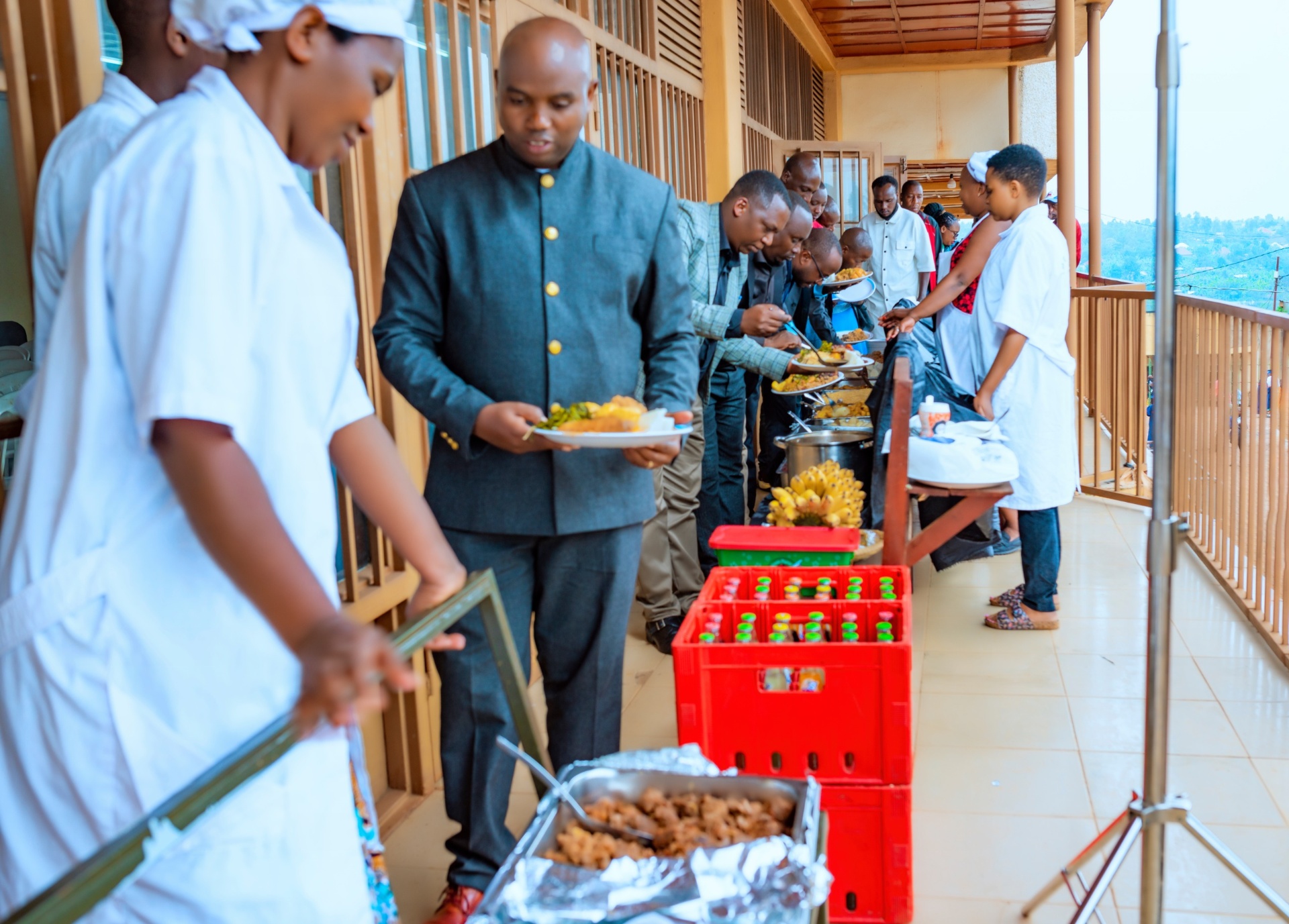
Our feeding program continues to provide nutritious meals to children in vulnerable communities.
How Faith-Based Organizations Respond to Disasters in Rwanda
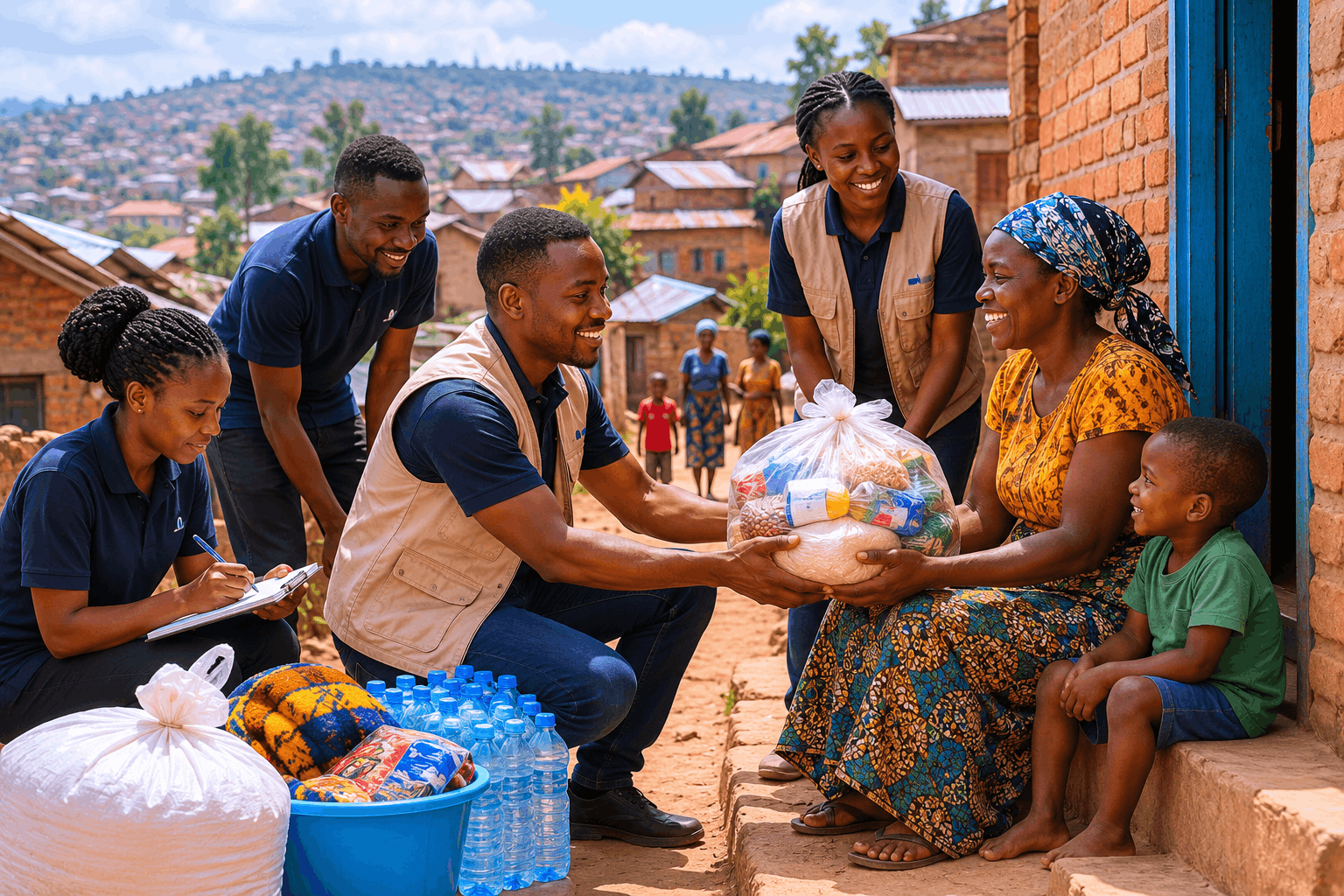
From immediate emergency relief in the first 48 hours, to long-term recovery programs that rebuild livelihoods and restore hope, faith-driven humanitarian work is filling a critical gap in Rwanda's disaster response ecosystem.