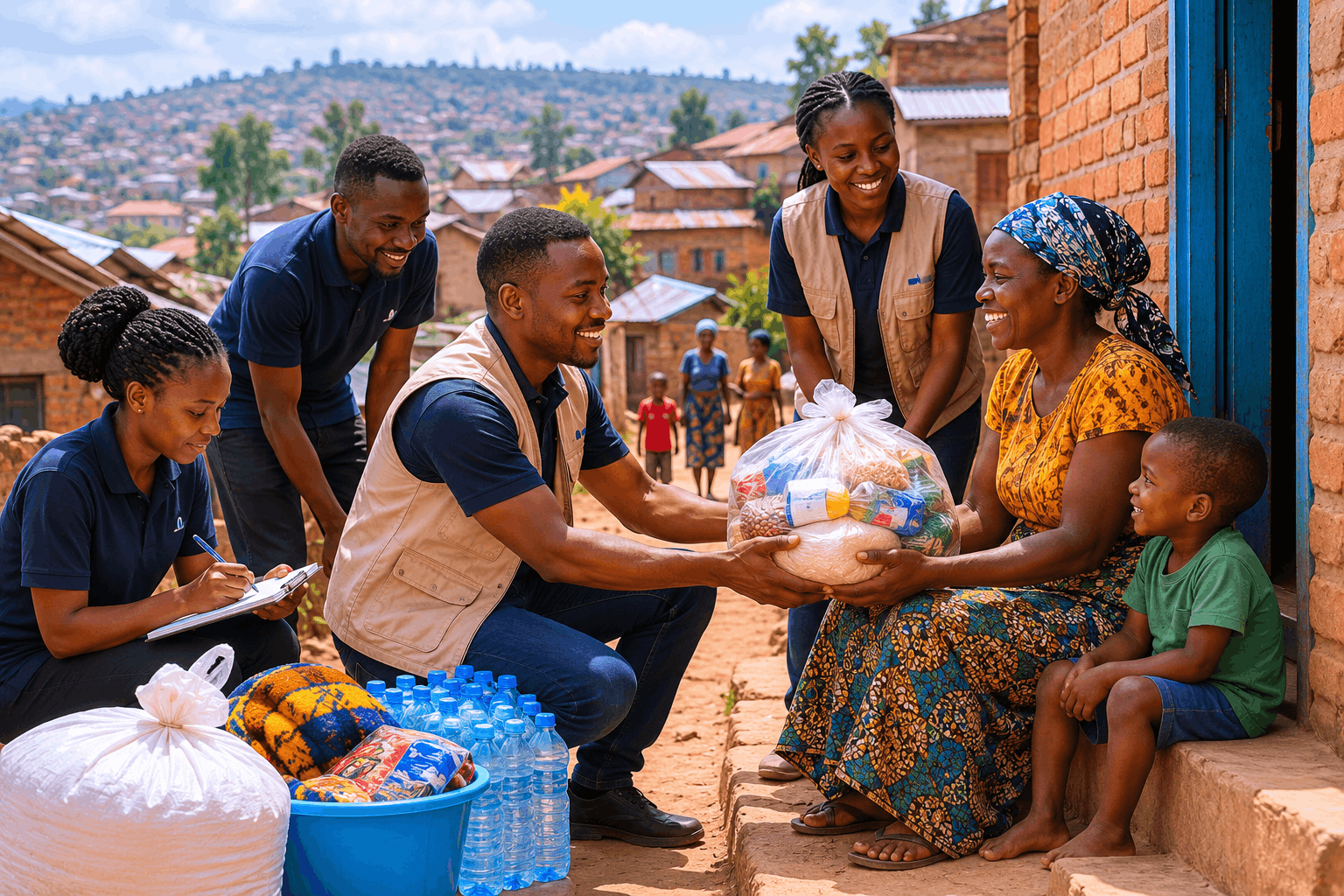
When disaster strikes Rwanda, whether a flash flood sweeps through hillside communities, a fire reduces a family's home to ash, or a sudden crop failure leaves hundreds hungry. The first responders are not always government agencies. Often, they are faith-based organizations (FBOs): churches, Christian nonprofits, and faith-driven humanitarian groups already embedded in the very communities that need help most.
This article explores how faith-based organizations in Rwanda respond to disasters, why their role is irreplaceable, and how you can support this life-saving work.
What Are Faith-Based Organizations in Disaster Response?
Faith-based organizations are nonprofits, charities, and community groups that are motivated and guided by religious values. In Rwanda's humanitarian landscape, these include local churches, Christian relief organizations, Catholic agencies, and interfaith coalitions that carry out emergency response alongside their regular community development work.
Unlike purely secular NGOs, FBOs draw on something beyond funding and logistics, drawing on community trust, moral conviction, and a spiritually rooted commitment to serve the most vulnerable. In Rwanda, where faith plays a central role in daily life, this gives FBOs a unique and powerful position when disaster strikes.
According to the World Health Organization, faith-based organizations deliver an estimated 30–70% of healthcare services in sub-Saharan Africa, a figure that reflects their depth of reach across communities that government systems often struggle to access.
Rwanda's Vulnerability to Disasters
Rwanda is a landlocked, densely populated country in Central Africa. Its mountainous terrain, heavy seasonal rains, and high population density make it particularly vulnerable to:
- Landslides and mudslides in the Northern and Western provinces
- Flash floods are affecting low-lying communities near rivers and wetlands
- House fires, a constant risk in densely packed informal settlements
- Drought and food insecurity during poor rainfall seasons
- Disease outbreaks in refugee-hosting areas and rural communities
The Rwanda Ministry of Emergency Management (MINEMA) coordinates the national disaster response framework. However, with nearly 14 million people across thousands of villages, the government cannot do it alone. This is where FBOs step in, often arriving first, staying longest, and reaching deepest.
How Faith-Based Organizations Respond to Disasters in Rwanda
1. Immediate Emergency Relief
When disaster strikes, time is everything. Faith-based organizations are often the first on the ground because they are already there, with pastors living in the community, church volunteers know their neighbors, and local ministry networks can mobilize within hours.
What immediate emergency relief looks like in practice:
- Distributing emergency food packages to displaced families
- Providing clean water, hygiene kits, and blankets in the first 48 hours
- Offering temporary shelter within church buildings or community halls
- Coordinating with local leaders to identify the most affected households
- Providing emotional support and trauma counseling rooted in faith
At International Samaritan Rwanda, our emergency response team activates immediately when crises occur, reaching families in Kigali and surrounding areas with food, clothing, and essential supplies before larger institutions have completed their needs assessments.
2. Coordinating With Local Government and Partners
Effective disaster response in Rwanda requires coordination. FBOs do not work in isolation. They collaborate with:
- MINEMA, Rwanda's Ministry of Emergency Management, which oversees the national disaster risk reduction strategy
- The Rwanda Red Cross (redcross.rw), a key partner in search, rescue, and first aid response
- UNHCR Rwanda (unhcr.org/rwanda), especially in refugee-hosting areas like Mahama and Kiziba camps
- Local sector and cell leaders, who provide ground-level access and community coordination
This collaborative model means that faith-based organizations amplify rather than duplicate government response, filling critical gaps where formal systems are stretched thin.
3. Healthcare and Medical Support During Crises
Disasters often trigger medical emergencies, including injuries, infections, and the deterioration of chronic conditions, among vulnerable populations. Faith-based health networks in Rwanda play a central role in crisis healthcare.
According to Catholic Relief Services (CRS), FBOs have historically run a significant portion of Rwanda's health facilities, particularly in rural areas. During emergencies, these networks mobilize health workers, distribute medications, and provide triage support.
International Samaritan Rwanda supports patients with chronic illnesses, including diabetes, HIV, and hypertension, whose conditions become life-threatening when disaster disrupts access to medication and follow-up care. Emergency situations make this healthcare bridge even more critical.
4. Providing Shelter and Protection to the Most Vulnerable
Among disaster-affected populations, certain groups face the highest risk: children, the elderly, people with disabilities, and women-headed households. Faith-based organizations are uniquely positioned to identify and protect these individuals because of their community relationships.
FBO-led shelter responses in Rwanda typically include:
- Opening church buildings and community halls as temporary refuge spaces
- Facilitating family tracing for separated children
- Providing safe spaces for women and children fleeing crisis situations
- Connecting displaced people with longer-term housing solutions
The Lutheran World Federation Rwanda and other faith-driven agencies have long modeled this kind of comprehensive, protection-centered shelter response in Rwanda's most fragile communities.
5. Psychosocial Support and Spiritual Care
Physical survival is only part of disaster recovery. Survivors of floods, fires, and other catastrophes often experience profound grief, trauma, anxiety, and loss of hope. This is an area where faith-based organizations offer something irreplaceable, offering spiritual care, counseling, and community belonging.
In Rwanda's context, where the wounds of the 1994 genocide remain part of the national consciousness, trauma-informed care with a spiritual dimension is especially meaningful. FBOs provide:
- Prayer, pastoral counseling, and community solidarity
- Grief support groups through local churches
- Rebuilding a sense of identity and purpose rooted in faith
- Long-term discipleship and mentoring for survivors
This holistic model, addressing body, mind, and spirit, is at the heart of what distinguishes faith-based humanitarian work from purely logistical aid delivery.
6. Long-Term Community Recovery and Resilience
Disaster response is not just about the first 72 hours. It is about walking with communities through months of rebuilding, restoring livelihoods, education, and dignity. Faith-based organizations excel at this long game.
Post-disaster recovery efforts by FBOs in Rwanda include:
- Vocational training programs for disaster-affected youth who have lost their income sources
- Psychosocial rehabilitation and life skills programs
- Agricultural recovery support for farming families
- Rebuilding of community infrastructure, including churches, schools, and sanitation facilities
- Community resilience programs that teach disaster preparedness
The World Food Programme Rwanda recognizes that food security recovery after a disaster can take months. Faith-based partners help bridge this gap through sustained food distribution and livelihood restoration programs long after the cameras have moved on.
Why Faith-Based Organizations Are Uniquely Effective in Rwanda
Several factors give FBOs a distinct advantage in Rwanda's disaster response ecosystem:
Deep Community Trust
Churches and faith communities are woven into the fabric of Rwandan society. When a pastor or faith leader tells a community that help is available, people believe it. This trust accelerates response, reduces fear, and ensures aid reaches those who need it most.
Pre-Existing Networks
FBOs do not need to build community networks from scratch when a disaster strikes; they already have them. Church networks, prayer groups, women's fellowships, and youth ministries become instant response teams when emergencies occur.
Volunteer Mobilization
Faith motivates volunteers. The belief that serving a neighbor in need is a spiritual act drives extraordinary volunteerism within faith communities, reducing costs and expanding capacity in ways that purely institutional organizations cannot replicate.
Presence in Remote Areas
Many of Rwanda's most disaster-vulnerable communities are in remote hills and rural areas far from government services. Local churches are often the only permanent institutions in these areas, making them the natural anchor of emergency response.
Holistic Care
FBOs understand that recovery requires more than food and shelter. By addressing emotional, relational, and spiritual needs alongside physical ones, faith-based organizations help survivors rebuild not just their homes but their sense of hope and human dignity.
Challenges Facing Faith-Based Disaster Responders in Rwanda
Despite their strengths, FBOs face real challenges in disaster response:
- Limited funding: Most FBOs operate on small budgets and depend heavily on donations, making rapid scale-up difficult
- Coordination gaps: Without formal integration into national systems, some FBO efforts can overlap or miss the hardest-to-reach families
- Capacity and training: Volunteer-led responses sometimes lack technical expertise in areas like structural assessment, medical triage, or water and sanitation
- Sustainability: Sustained long-term recovery support requires ongoing donor commitment, which can be difficult to maintain after media attention fades
Addressing these challenges requires investment in FBO capacity, including funding, training, and formal partnership frameworks with government bodies like MINEMA.
How You Can Support Faith-Based Disaster Response in Rwanda
Every disaster response effort depends on people and organizations who choose to act. Here are ways you can make a difference:
1. Give Financially
Your financial gift directly funds emergency food packages, shelter support, medical assistance, and long-term recovery programs. At International Samaritan Rwanda, 100% of your emergency response donation goes to families in crisis.
Donate to Our Emergency Response Program
2. Partner With Us
Churches, businesses, and organizations can partner with International Samaritan Rwanda to co-fund and co-implement disaster response programs. Partnership brings resources, networks, and collective impact.
Explore Partnership Opportunities
3. Spread Awareness
Share this article. Tell your church, workplace, or community about the critical role of faith-based organizations in Rwanda's disaster response. Awareness leads to action.
4. Pray
For communities rebuilding after loss. For volunteers exhausted from serving. For leaders making difficult decisions under pressure. Prayer is a meaningful form of solidarity.
Faith in Action When It Matters Most
Disasters do not wait for perfect conditions. They strike suddenly, devastating families and communities who have no warning and few resources. In those moments, faith-based organizations in Rwanda stand in the gap, bringing food, shelter, medical support, emotional care, and spiritual hope to people who need it most.
From the hillside villages of the Northern Province to the informal settlements of Kigali, the work of FBOs in Rwanda's disaster response ecosystem is not optional. It is essential.
At International Samaritan Rwanda, we are committed to serving the whole person, body, mind, and spirit, in every crisis we respond to. Because we believe that true humanitarian work is not just about survival. It is about restoring dignity, rebuilding hope, and transforming lives from the inside out.
Why Skills Training Is the Best Investment in Rwanda's Future
5 Ways You Can Help a Vulnerable Family in Kirehe This Month
Related Articles
Faith and Compassion: Our Guiding Light
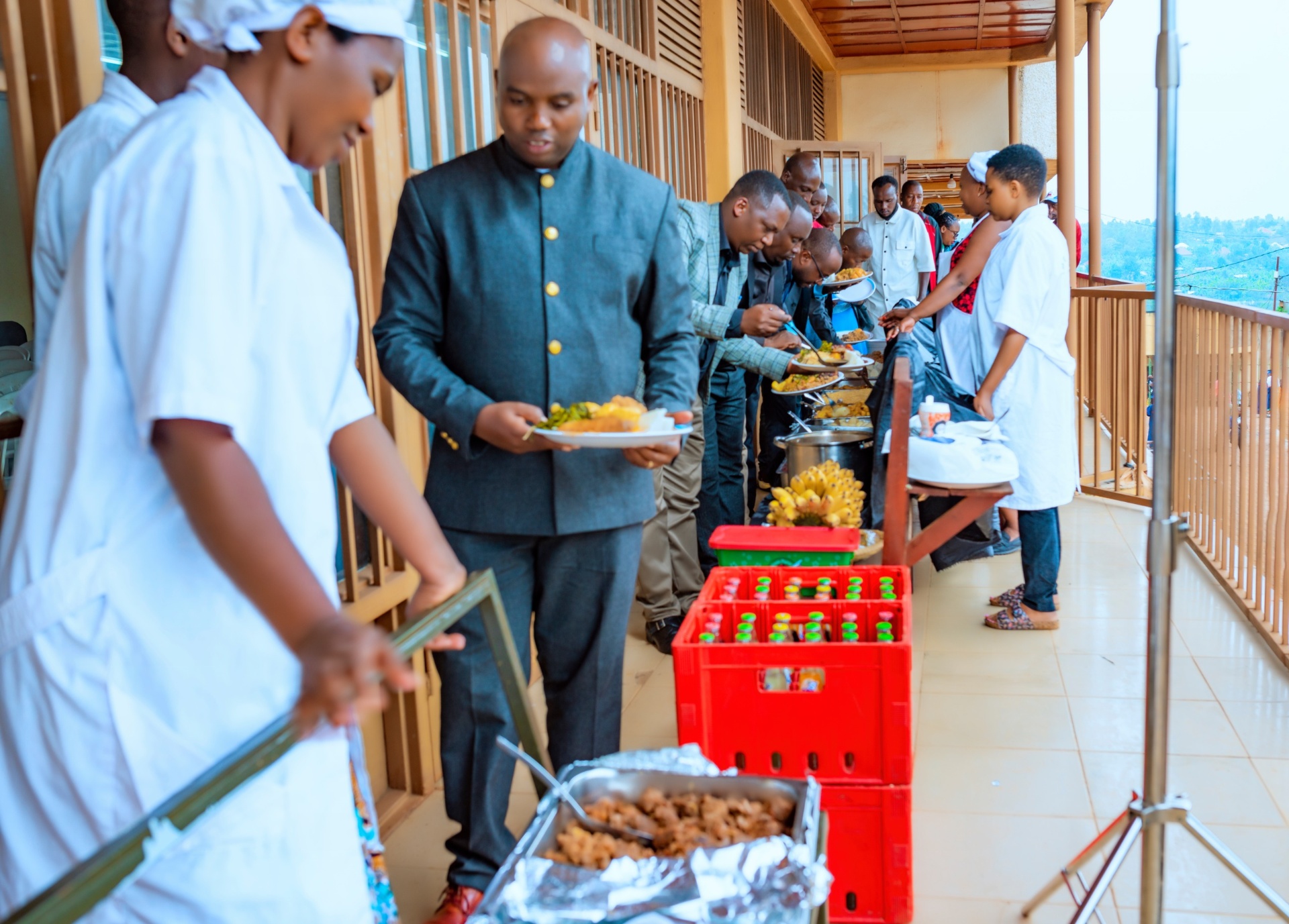
Our feeding program continues to provide nutritious meals to children in vulnerable communities.
How Faith-Based Organizations Are Fighting Poverty in Africa
Across Africa, poverty wears many faces: a mother skipping meals so her children can eat, a teenager whose education ended too soon, a family left homeless after floods.